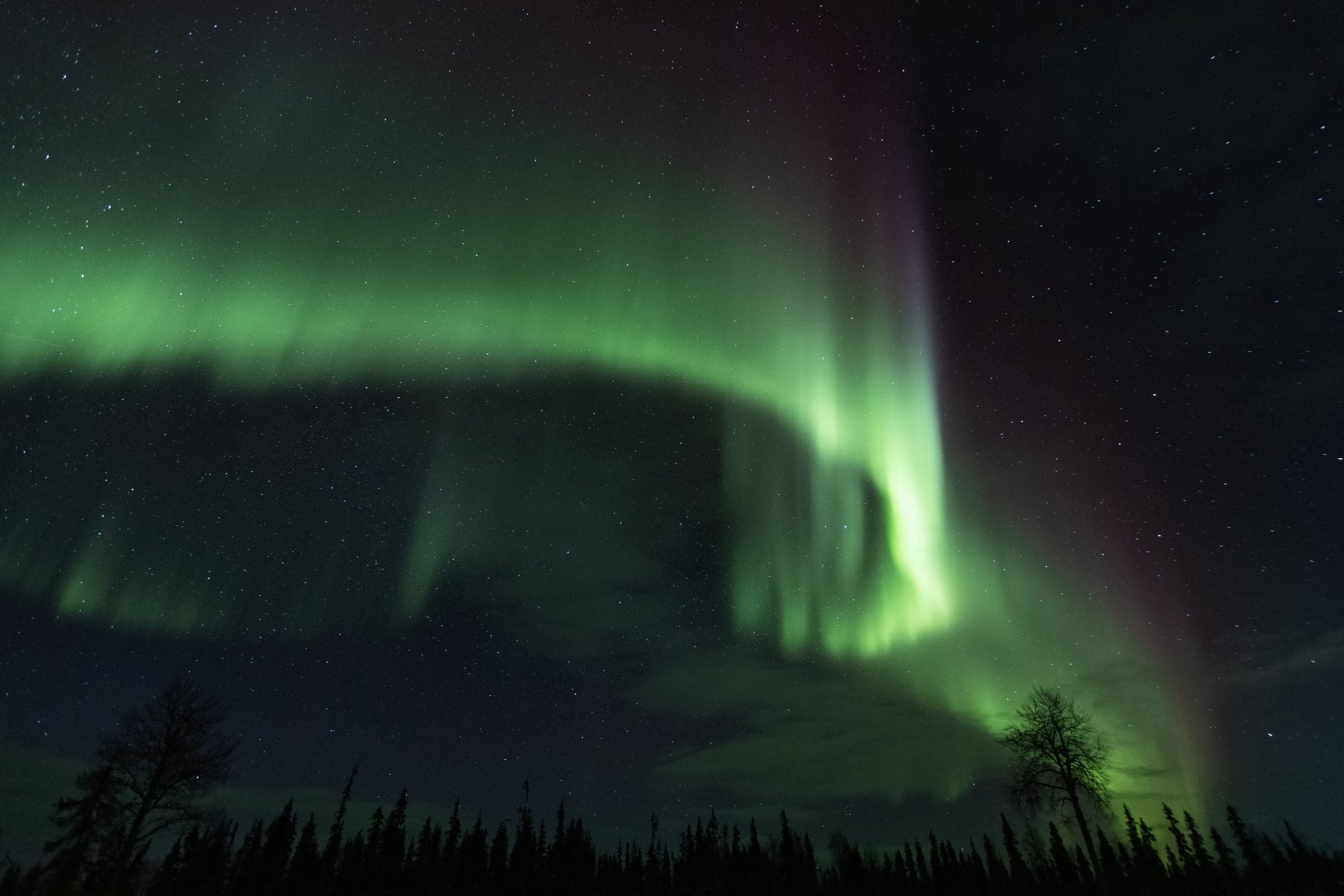
Destination Guide
Northern Lights in Finnish Lapland: When and Where to See Them
Dennis Stever
|Founder, TJD
|September 2, 2026
|6 min read
The Northern Lights are probably the thing people ask us about most. Usually some version of: will we see them?
The slightly disappointing answer is that I have no idea. Nobody does.
You can look at forecasts, solar activity, cloud cover and about seventeen different apps, but ultimately the Northern Lights are a natural phenomenon and they don't particularly care that you flew to Finland to see them.
“That is also, I think, part of what makes them worth seeing.”
Can You See the Northern Lights in Finnish Lapland?
Yes. Very much so.
Finnish Lapland is well above the Arctic Circle and is an excellent place to see the Aurora Borealis.
But there are two things that matter more than almost anything else. It needs to be dark. And you need a reasonably clear sky.
You could have an enormous aurora happening above you, but if there is a thick layer of cloud between you and it, you're going to spend the evening looking at a slightly green cloud.
It happens.
What Is the Best Time to See the Northern Lights in Finnish Lapland?
People naturally want a specific month. January? February? March? There isn't really one perfect answer.
The season is long. It begins when the nights become dark again around mid-August and continues until roughly mid-April. September through March is usually considered the main period for seeing them.
Autumn can actually be extremely good. The nights are dark, there is often less snow reflecting artificial light, and you can sometimes see the aurora reflected in lakes before they freeze.
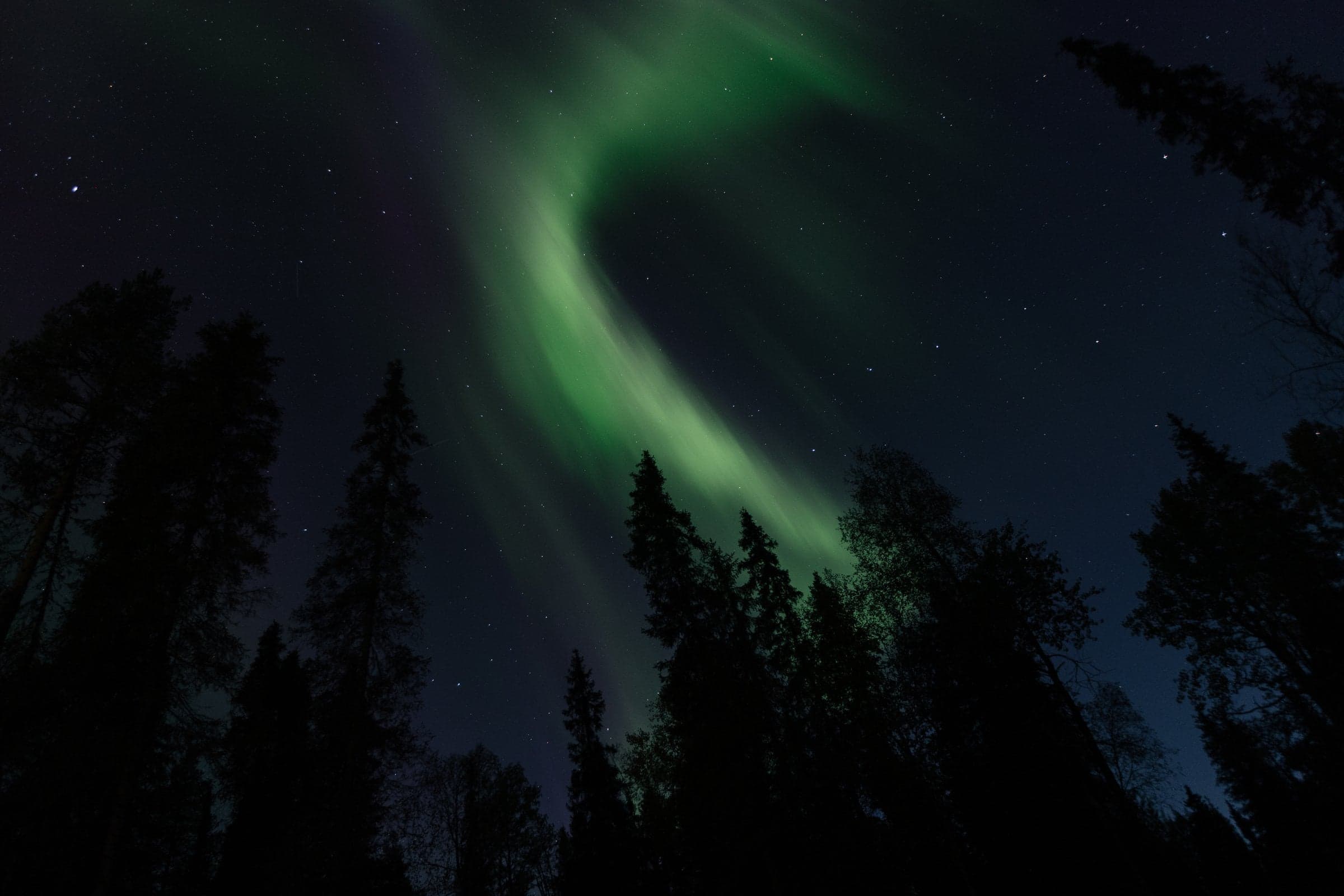
Early season aurora over the forest, before the snow arrives
But personally, winter is hard to beat.
There is something fairly ridiculous about standing in a completely snow-covered forest at -20°C while green light moves across the sky above you.
“Even after seeing it many times, it doesn't really become normal.”
December, January, February and March are all good months to visit Finnish Lapland if seeing the Northern Lights is important to you.
I wouldn't choose between those months purely based on the aurora. I'd choose based on what else you want your trip to feel like. December and January are darker. February and March have considerably more daylight. All of them still have dark nights.
What Time Do the Northern Lights Appear?
This is another one where I wish there was a better answer.
They can appear in the evening. They can appear in the middle of the night. They can disappear after ten minutes and then come back two hours later.
Sometimes they are already above you while you're eating dinner. Sometimes you wait outside for an hour, give up, go to bed and discover in the morning that they appeared twenty minutes later.
Which is mildly irritating.
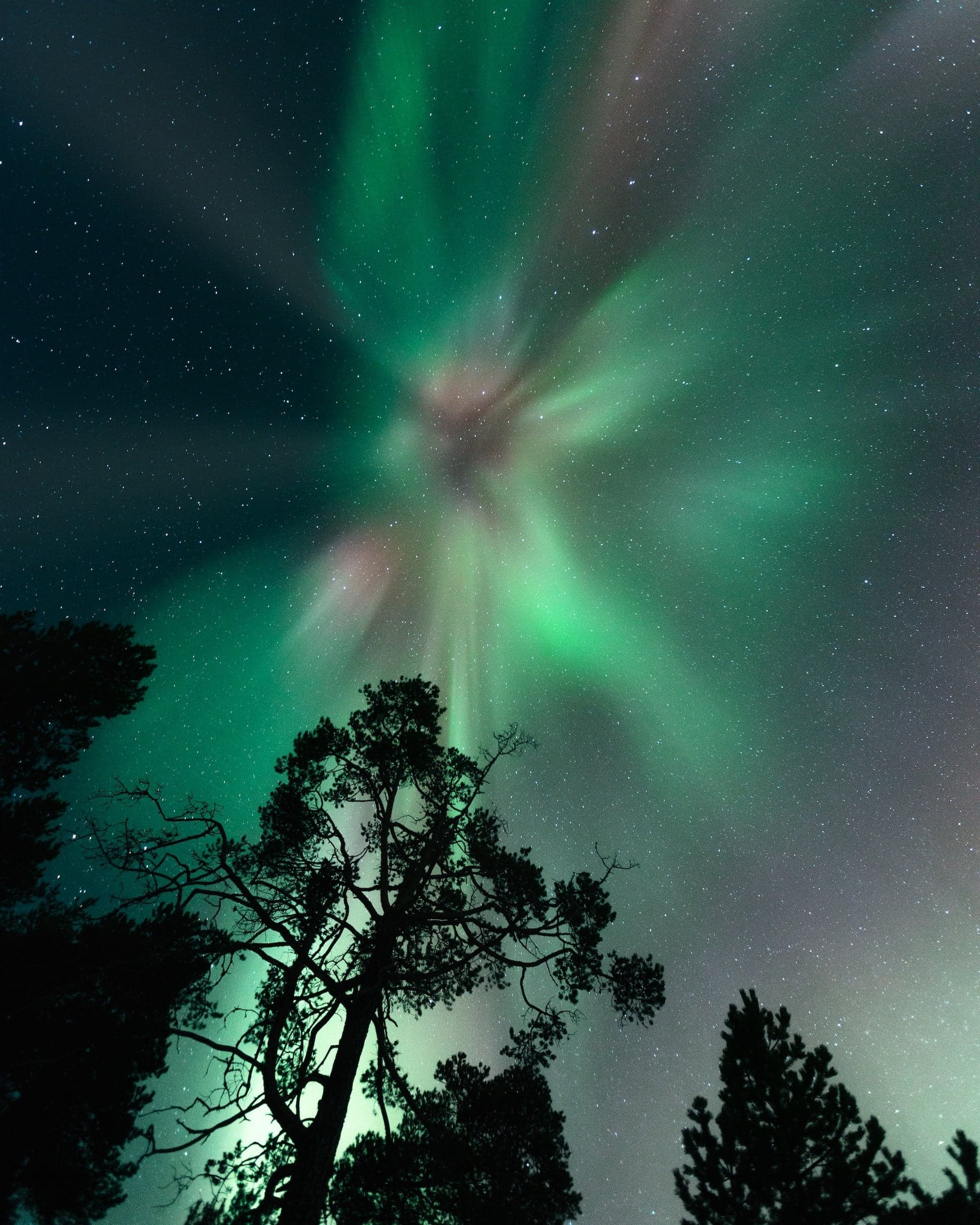
No fixed schedule. They appear when they appear
“There isn't a nightly Northern Lights performance at 9pm.”
The best thing you can do is keep an eye on the sky, watch the cloud forecast and use an aurora alert or forecast rather than trying to plan your entire evening around an exact time.
Where Is the Best Place to See the Northern Lights in Finnish Lapland?
The basic rule is pretty simple: get away from unnecessary light.
The villages and resort towns of Finnish Lapland have restaurants, hotels, ski slopes, roads, shops and streetlights. You absolutely can see strong Northern Lights from a village, but darker surroundings will give you a much better view when the aurora is weaker.
The local advice is similarly straightforward: find somewhere with a clear, dark view of the northern sky.
You don't necessarily need to drive 50 kilometres into the wilderness. You just want to get away from bright lights and give your eyes a bit of time to adjust.
This is one of the reasons we tend to place guests in cabins in the forest, away from the nearest village, when we design Lapland journeys.
Surrounded by trees rather than streetlights, you don't have to book an excursion every night and chase the aurora around Lapland. Sometimes you can just walk outside.
“Which, in all honesty, is how I prefer to see them.”
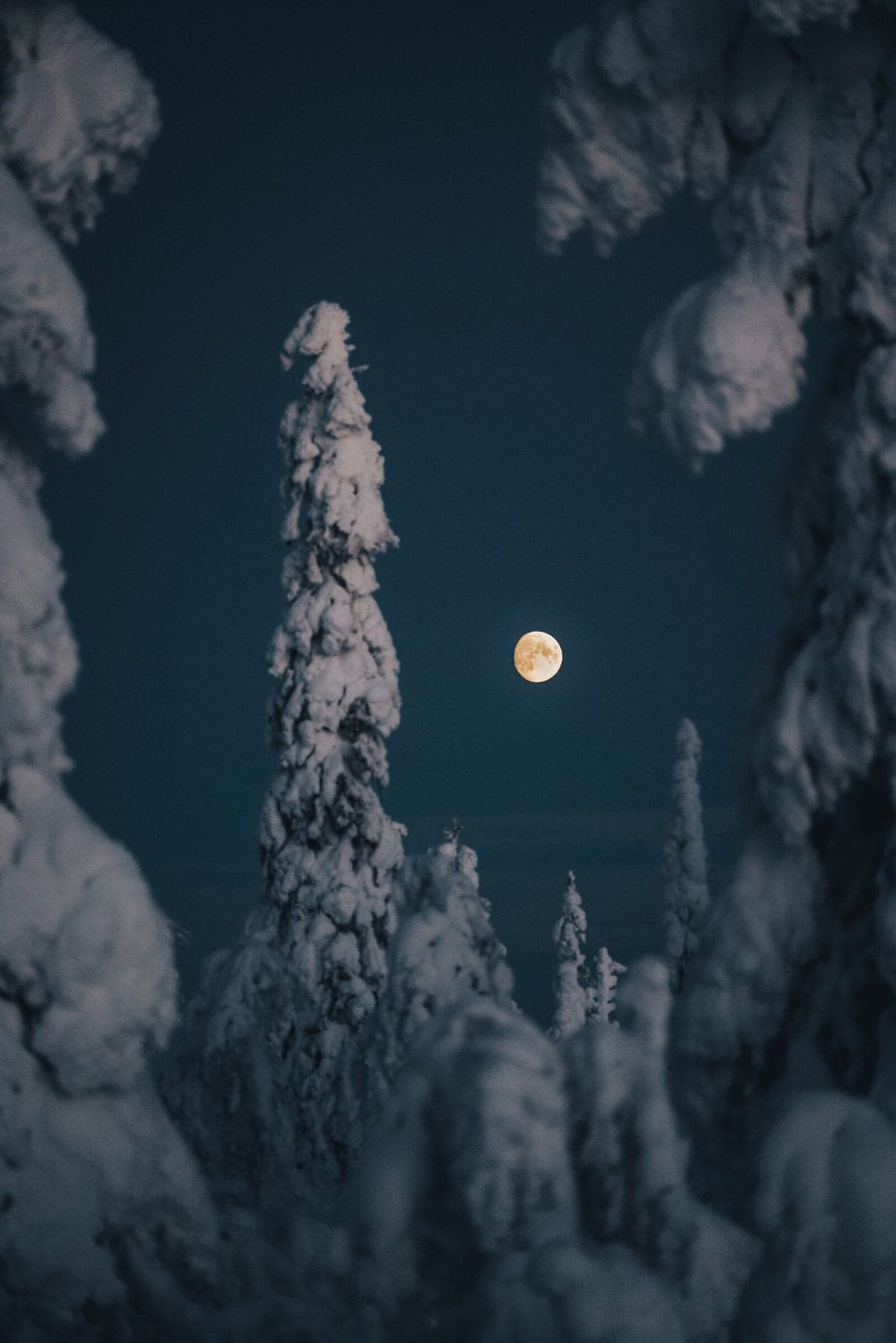
Away from the streetlights, the forest gives your eyes time to adjust
Do You Need a Northern Lights Tour?
No.
Northern Lights tours can be great, particularly if it's your first time in Lapland. A good guide understands local weather, knows where there may be breaks in the clouds and can take you somewhere darker if conditions around your accommodation aren't ideal.
But you don't need a tour to see the Northern Lights.
“The aurora does not know whether you paid €150 to stand underneath it.”
If the sky above your accommodation is dark and clear, looking up remains a surprisingly effective strategy.
I think tours make the most sense when conditions are uncertain or when someone genuinely wants the experience of going out and searching for them. What I probably wouldn't do is book a Northern Lights excursion for every night of a five-night holiday.
Give yourself time.
How Many Nights Should You Stay to See the Northern Lights?
This matters more than people realise.
If you come to Finnish Lapland for one night, you might get lucky. Or it might be cloudy. There is absolutely nothing you can do about that.
Stay for four or five nights and suddenly you have four or five different chances for the weather and aurora activity to line up.
Local tourism boards in Lapland recommend staying at least three nights, partly because a longer stay improves your chances of seeing the Northern Lights. I think that's sensible.
If seeing the aurora is genuinely important to you, I would rather spend money staying an extra night or two than trying to engineer one perfect evening.
“Nature is generally quite bad at respecting itineraries.”
We go into this in more detail in How Many Nights Do You Need to See the Northern Lights?. The short version: four to five nights, and don't plan every evening around them.
Are the Northern Lights Really as Bright as They Look in Photographs?
Sometimes. And sometimes absolutely not.
Modern cameras are incredibly good at collecting light. A photograph might show a vivid green aurora when your eyes are seeing something closer to a pale grey-green shape. That surprises some people.
But when the Northern Lights are strong, they really can be spectacular to the naked eye. You can see the structure moving. You see curtains forming across the sky. Sometimes the entire sky seems to change surprisingly quickly.
And occasionally you get one of those nights where you stop trying to photograph it because looking at your phone suddenly feels like an incredibly stupid thing to be doing.
“Those are the good ones.”

A snow-covered forest at -20°C. The kind of place the aurora is best seen from
Can the Northern Lights Be Guaranteed?
No. I'd be suspicious of anyone who tells you otherwise.
There are businesses offering aurora trips with various guarantees about trying again on another evening, but nobody can guarantee that the Northern Lights themselves will appear.
You need solar activity. You need darkness. You need the right conditions. And, particularly in Lapland, you need the clouds to cooperate.
That's it.
What Should You Wear While Watching the Northern Lights?
More than you think.
Standing still at -20°C is completely different from skiing or walking at -20°C. When you're moving, your body generates heat. When you're staring upward at the sky for 45 minutes, it doesn't.
What to wear
- Proper winter boots and warm socks
- Thermal base layers
- Insulated trousers
- A good winter jacket
- Gloves and something warm on your head
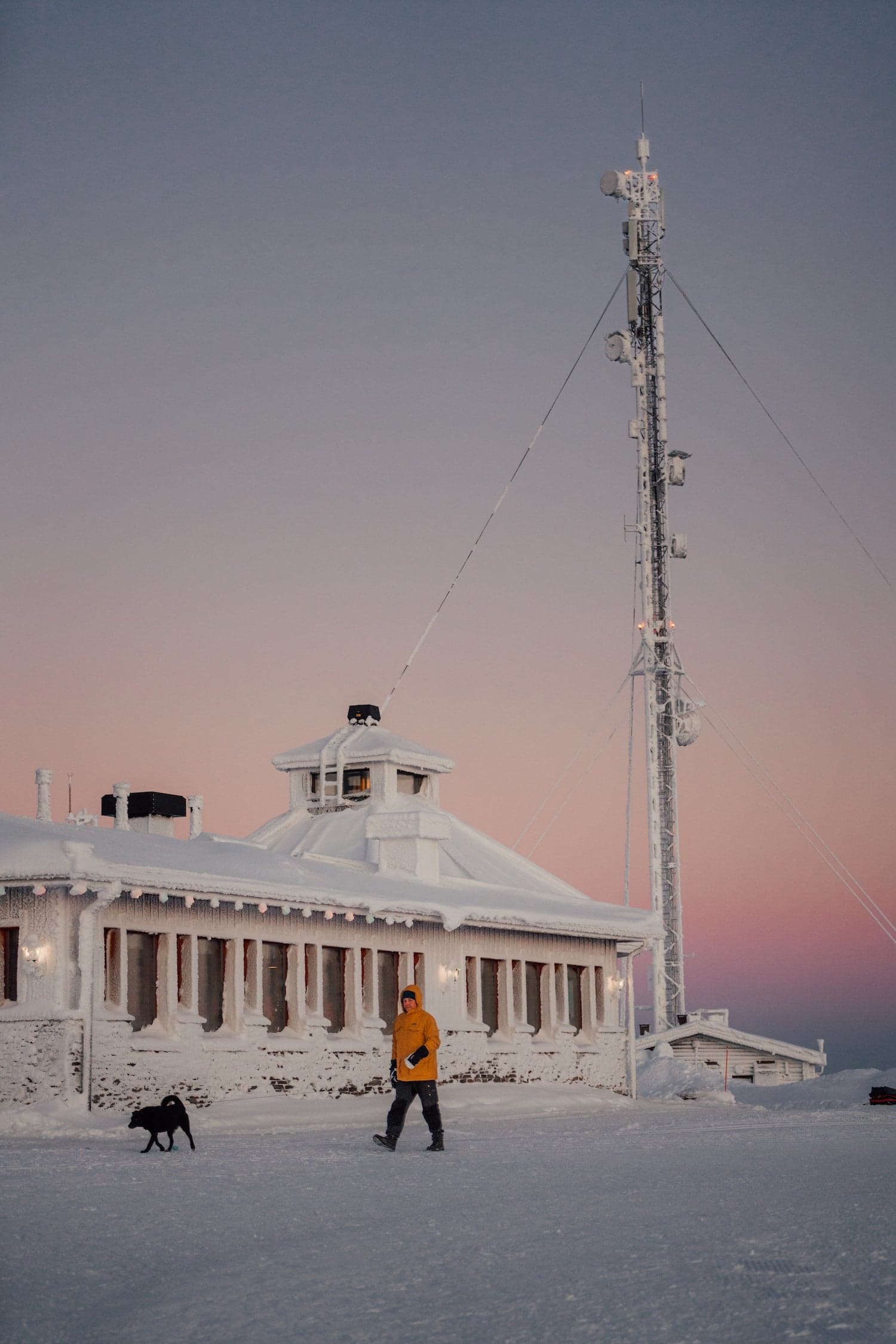
Dressed for standing still, not for walking
In the colder parts of winter, Finnish Lapland can reach around -30°C. You may feel slightly overdressed when you leave your cabin. Twenty minutes later you'll probably be pleased about it.
Being There When It Happens
When we design a Lapland journey, we want the landscape to actually be part of the stay. Not something you need to get into a minibus to go and find.
That usually means a cabin in the forest, away from most of the artificial light of the nearest village, with a clear view of the northern sky. We also set guests up with Northern Lights alerts so nobody has to spend the entire evening obsessively refreshing an aurora forecast.
If something is happening, you can put your boots on and go outside.

Some nights you see nothing. Some nights, this
Maybe you'll see nothing. Maybe you'll see a faint green line over the trees. Or maybe you'll get one of those nights where the whole sky lights up and everyone suddenly goes very quiet.
I suppose that's the strange thing about the Northern Lights. We spend a lot of time trying to predict them, photograph them and improve our chances of seeing them. But you can't really control any of it.
“You just have to be there when it happens.”
Continue the journey
Explore Finnish Lapland JourneysContinue Reading
More From the Field


Ready to Go?
Let's Design Your Journey
Every story in our journal comes from a place we know deeply. Tell us what inspires you, and we'll craft something extraordinary.
Design Your Journey