
Planning Guide
How Many Nights Do You Need to Stay in Lapland to See the Northern Lights?
Dennis Stever
|Founder, TJD
|April 15, 2026
|5 min read
Guests ask us the same question every week: how many nights do I need to see the Northern Lights? The honest answer is one. One clear, dark night in Finnish Lapland with decent solar activity, and you could witness one of the most extraordinary natural displays on Earth. The more useful answer is that one night isn't a plan. It's a coin toss.
After 15 years of leading trips across Lapland, what I tell every guest is the same thing: there is no best time. From September through to late March, when the skies are dark, the aurora is always possible. What you're really trying to avoid isn't bad timing; it's clouds and light pollution. This is why where you choose to stay is very important. And the way you beat the clouds is simple. You give yourself more nights in some of the best locations in Lapland like Sixty Eight North – Lapland Forest Retreat.
Based on TJD guest data across Finnish Lapland
Right Now Is a Very Good Time
The sun operates in roughly 11-year cycles, and we're at the peak of Solar Cycle 25. The 2025/2026 season delivered some of the strongest aurora activity in two decades, and 2026/2027 is expected to be equally powerful. Your chances of seeing Northern Lights on any given clear night in Lapland are higher right now than they've been since 2013. If you've been waiting for a sign to book, this is it.
“We're in a solar maximum right now. The aurora is stronger, more frequent, and more vivid than it's been in over a decade. This coming winter is the time.”
— Dennis SteverClouds Are the Real Enemy
The aurora doesn't have an off-season in Lapland. From early September until the end of March, solar particles are hitting the atmosphere whether you can see them or not. The only things that stop you are cloud cover and light pollution, which is why where you stay matters as much as when you go. A guest who spends seven nights at a remote wilderness lodge in October has a far better chance than someone who visits a town for two nights in "peak" February. Every additional night in the right location is another chance for the clouds to break.
The Probability Argument
On any single night in Lapland during aurora season, your chance of a clear sighting sits around 40%. That's Finnish weather. But those odds compound beautifully over multiple nights.
Northern Lights Probability by Trip Length
The jump from two nights to six isn't twice as good. It's a completely different experience. At two nights, you're hoping. At six, you're choosing which display was your favourite.
Two Aurora Seasons, Both Exceptional
Lapland has two distinct aurora seasons. Neither is better; they're different experiences, and both deliver. What matters in either season is being far enough from town that there's zero light pollution between you and the sky.
- First darkness after the midnight sun. Skies eager and vivid
- Milder temperatures, colourful autumn landscapes by day
- Aurora reflecting off still lakes before the freeze
- Quieter season. Fewer visitors, more solitude
- Long dark nights. Maximum viewing hours per evening
- Snow-covered landscapes amplify the light show
- Combine aurora with husky rides, snowmobiling, ice fishing
- The classic Lapland experience: fires, cabins, silence

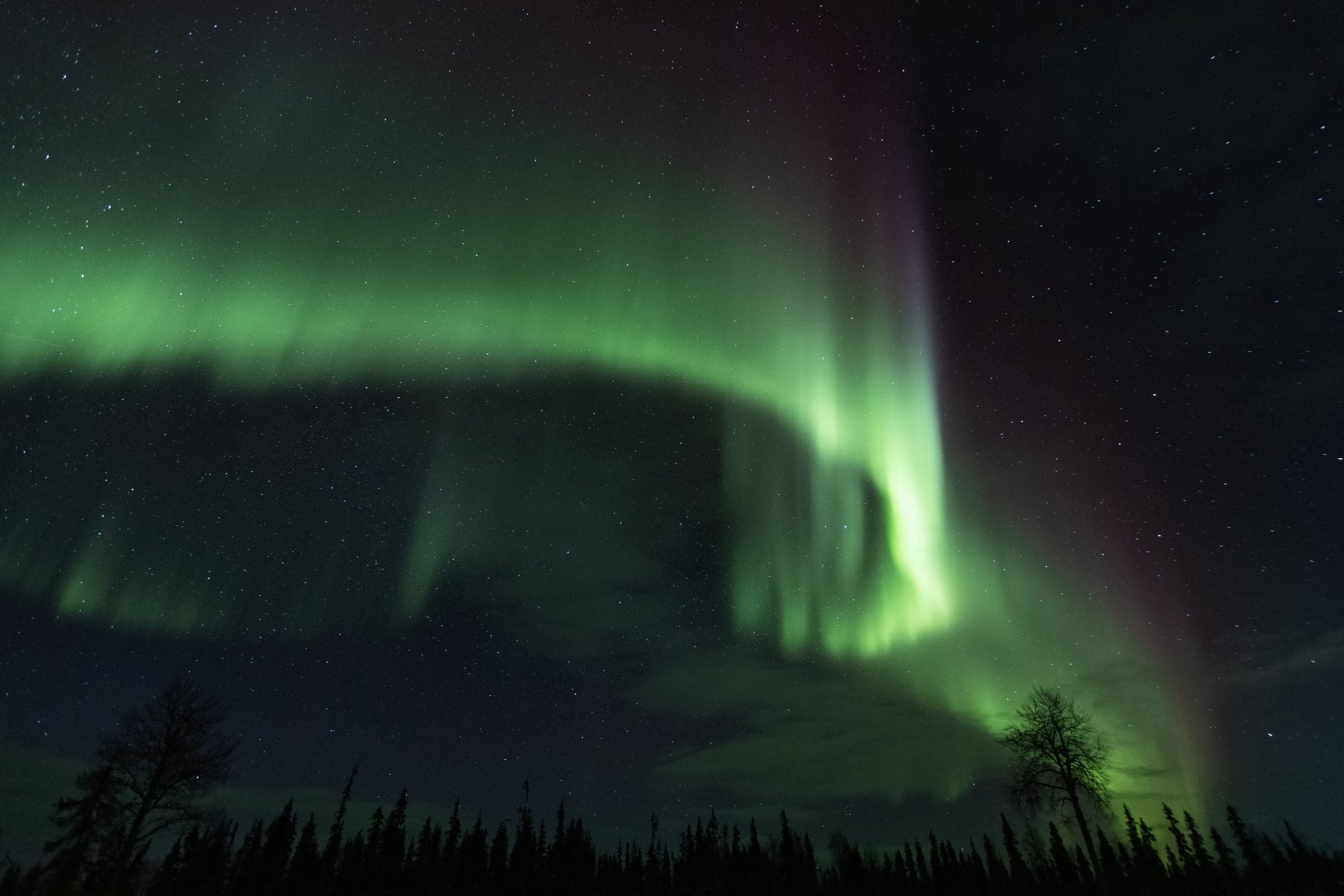
Sixty Eight North. The kind of location where aurora sightings become inevitable
3 Nights: Possible, But Tight
Three nights gives you two real aurora evenings. If cloud rolls in for one, you're down to a single chance. That's the reality.
What 3 Nights Looks Like
- One or two aurora-eligible evenings after travel
- No buffer if weather doesn't cooperate
- Works as an add-on to a Helsinki city trip or a longer Lapland itinerary
- Most 3-night guests tell us they wish they'd stayed longer
A 3-night Lapland extension works well bolted onto a longer Finland itinerary. Fly up from Helsinki, experience the wilderness, and return. On its own, it's a gamble. A beautiful one, but still a gamble.
5 Nights: Where the Odds Shift
Five nights is where the trip starts working in your favour. Based at somewhere like Sixty Eight North near Levi, deep in the forest with zero light pollution, you have three to four clear evening windows and a real buffer. If Tuesday is cloudy, there's still Thursday.
Multiple Aurora Windows
Three to four clear evening chances. In a solar maximum year, one strong display is likely.
Daytime Experiences
Husky sledding, snowmobiling, snowshoeing, without cramming them back to back.
A Slow Day
Space for a sauna afternoon, a cabin morning, or just watching the light change over the frozen lake.
Cloud Insurance
One overcast night doesn't define your trip. You have room to wait it out.
Mental Reset
By night three you stop checking your phone. By night five, something has shifted.
Still Practical
A week door-to-door. Manageable for most schedules.
6–7 Nights: The Full Experience
This is what we recommend, and what we build the majority of our private journeys around. Based in the Levi wilderness, places like Sixty Eight North where there's nothing between you and the sky, six or seven nights means you stop chasing the aurora and start living alongside it. Some evenings it appears while you're on the cabin porch. Others your guide wakes you at midnight. The magic is in not knowing when.
What 6–7 Nights Unlocks
Near-Certain Aurora
At 93%+ sighting probability, you're almost guaranteed at least one strong display. Most guests at this length see two or three.
The Pace Deepens
Guests describe a shift around day four. The restlessness fades, the silence stops feeling strange, and Lapland starts to feel like somewhere you belong rather than somewhere you're visiting.
Bigger Experiences Open Up
A week allows for multi-hour husky expeditions, overnight wilderness camps, a full day of cross-country skiing, or an evening devoted entirely to aurora photography.
Flexibility Without Sacrifice
If the forecast says Thursday will be clear, your guide can rearrange activities so you're free that evening. With six nights, nothing gets cut; it just moves.
Side by Side
Short Stay vs. Full Week

3–4 Nights
Quick but limited- 1–2 aurora-eligible evenings
- No buffer for overcast nights
- Tightly scheduled. One activity per day max
- Works as an extension to a longer trip
- You'll see Lapland. You might not see aurora.

6–7 Nights
The full experience- 4–6 aurora-eligible evenings (93%+ sighting rate)
- Built-in weather flexibility
- Room for slow moments, rest days, and deeper experiences
- Time to combine regions or add a wilderness camp
- The trip guests describe as "life-changing."
What We Tell Our Guests
There is no wrong time to come to Lapland for Northern Lights. September through March, they all deliver. What matters is giving yourself enough nights in the right location. Remote, dark, away from town lights. That's the formula.
- No "best month." Any dark night from September to March can produce extraordinary aurora
- Clouds and light pollution are what stop you. Location matters as much as timing
- Solar maximum right now. 2026/2027 is one of the best aurora seasons in a decade
- Stay remote: wilderness lodges like Sixty Eight North near Levi give you dark skies every night
- Aim for 5–7 nights (93%+ sighting rate at 6 nights)
- Every extra night compounds your chances. The fifth night is worth more than the second
Every TJD Lapland journey is built with aurora in mind, but never around it alone. We place you in remote locations like Sixty Eight North near Levi, where dark skies are a given, and design flexible itineraries so your guide can shift activities around the forecast. Tell us your dates and we'll build around what you have.
“Two nights in Lapland is a hope. Five is a plan. Seven is when the place starts to change you.”
— Dennis SteverContinue the journey
Explore Lapland JourneysContinue Reading
More From the Field


Ready to Go?
Let's Design Your Journey
Every story in our journal comes from a place we know deeply. Tell us what inspires you, and we'll craft something extraordinary.
Design Your Journey